
Why you need a good tailor, according to a tailor
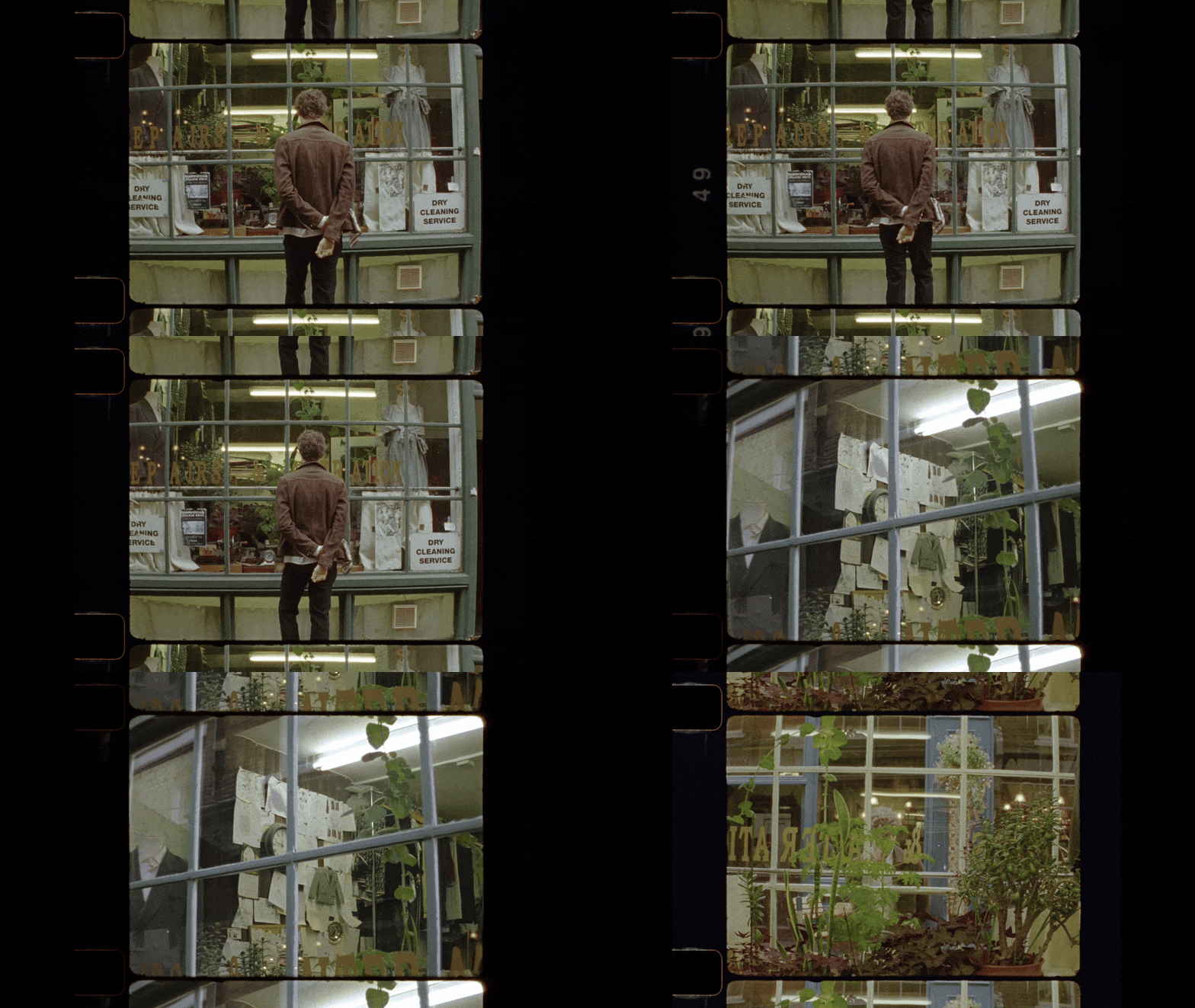
We return to the scene of our AW25 campaign shoot to reconnect with a north London legend, tailor Halit Bingul.
Words: Jack Blocker
“Believe me, people bring underwear and I sew it. They bring socks and I sew them. Everything I can do, I do.”
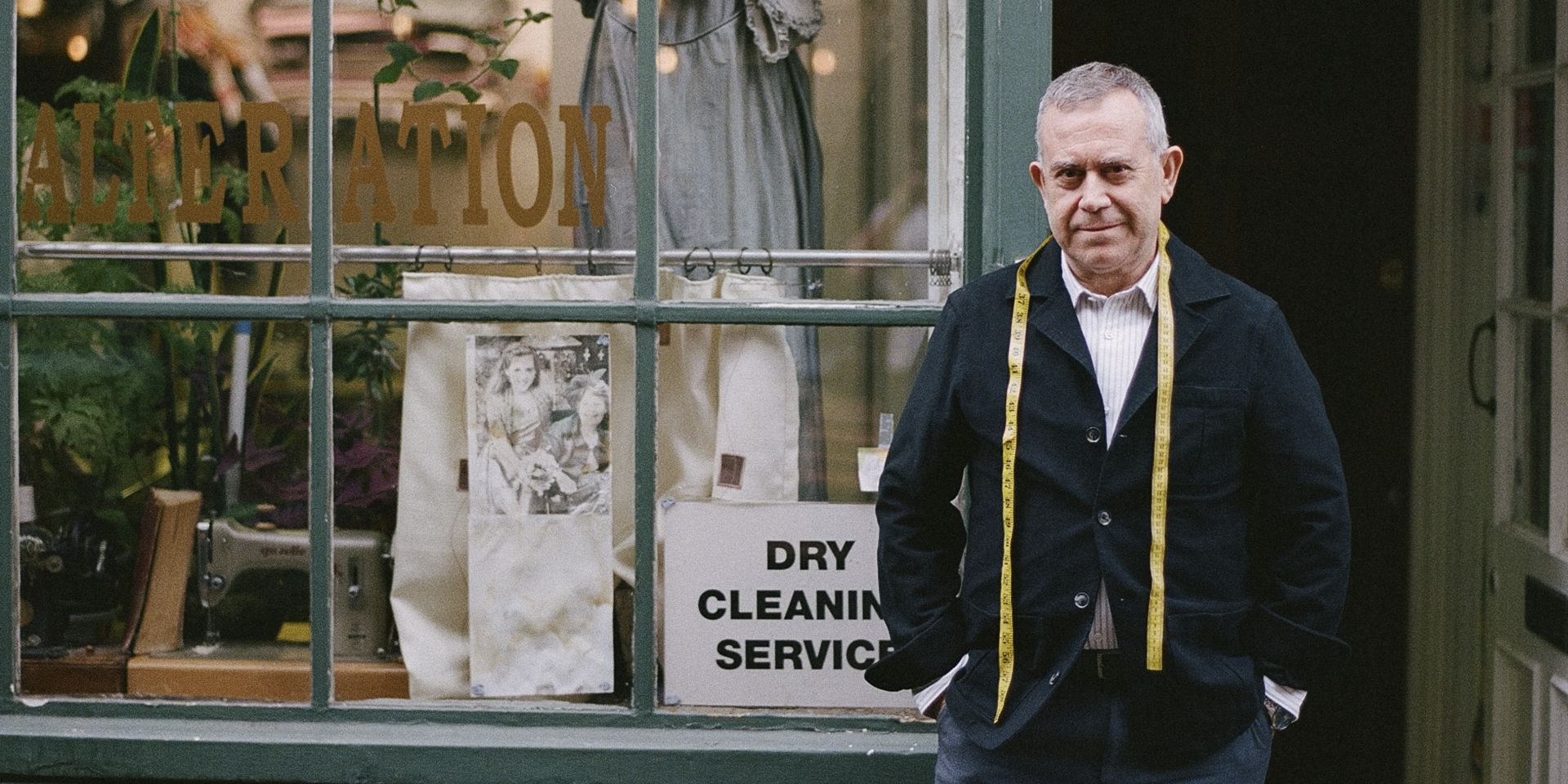
At the end of a cobbled alleyway in Hampstead, north London, Halit Bingul has established a reputation as a tailor you can depend on. He’ll hem trousers or make a bespoke suit from scratch. Halit, who started tailoring in his native Turkey when he was 12 years old, will even mend your pants.
“There is no such thing as no in this shop.”
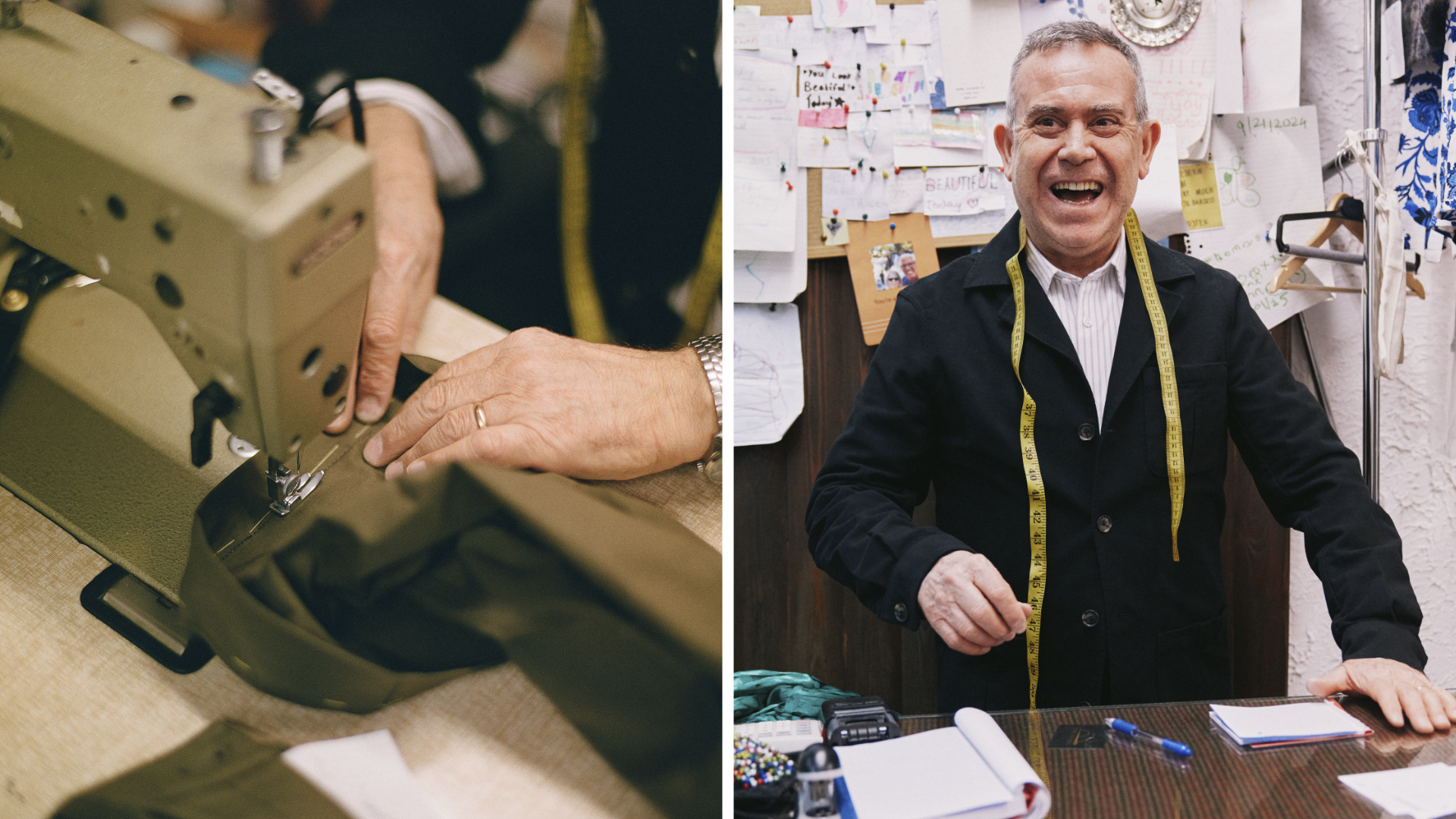
The shop, Unique Professional Tailors, is probably only a few metres bigger than a commercial walk-in. The walls are covered in thank-you notes from customers and drawings by his grandchildren. A clock pays tribute to Mustafa Kemal Atatürk, founder of the Republic of Turkey. Every other inch is packed with clothes. We first met Halit when he invited us to shoot some of our AW25 campaign in his shop. He hammed it up with our model, Richard, and even wore one of our new-season overshirts.
We promised to come back and interview him. While he initially said he didn’t want the attention, my colleague Elif, who is also Turkish, managed to change his mind. When we arrived on a Monday evening, he immediately asked if we’d like water or coffee. Elif said this was typical Turkish hospitality, but the fact he left to purchase our coffee at a nearby cafe was admittedly next level.
“I opened the shop about 20 years ago. I do my job with great pleasure,” Halit told us. “I work with positive energy, seven days a week. Even the hardest work does not feel difficult. You have to love it. My customers are very special and that makes me happy.”
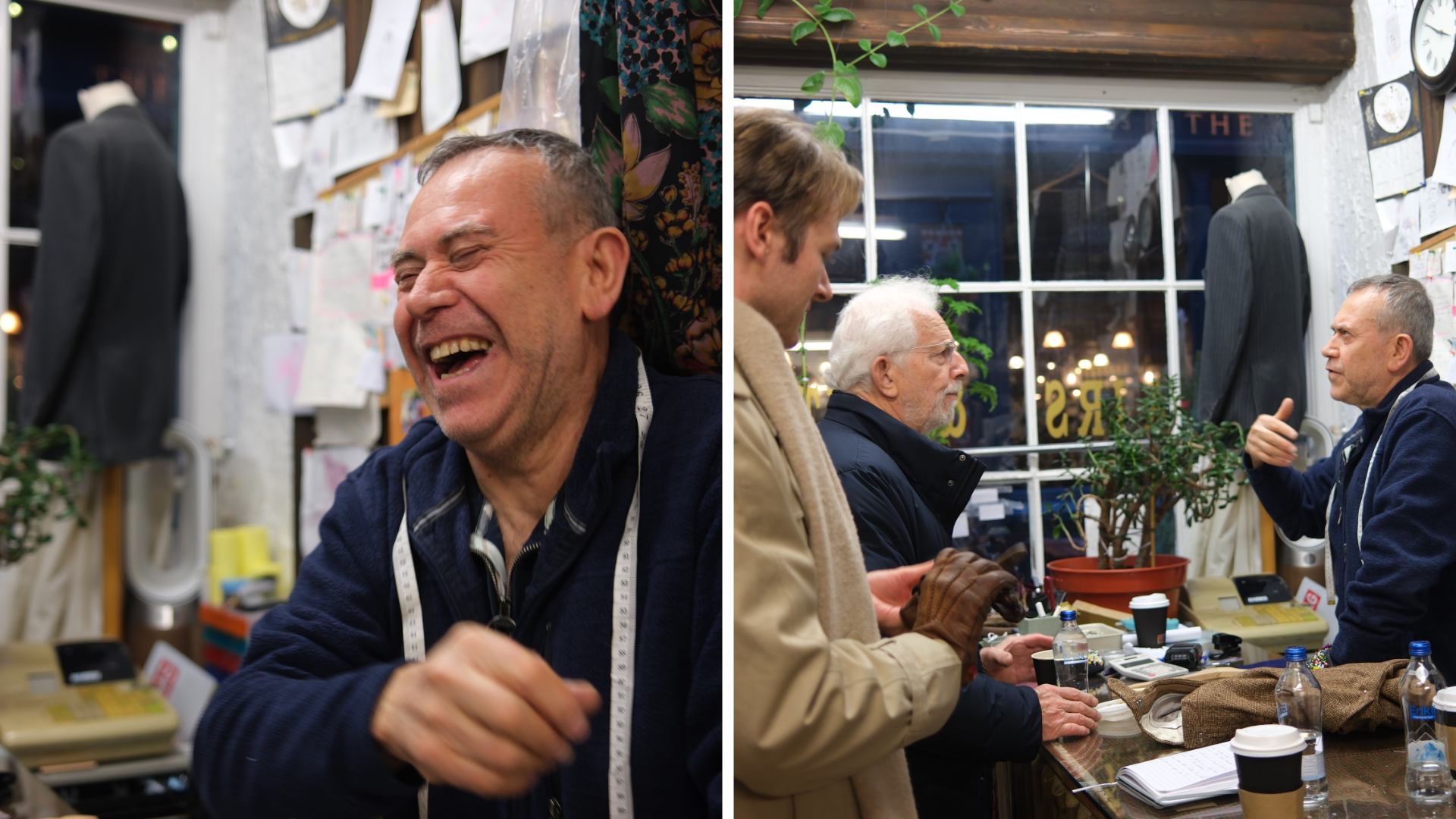
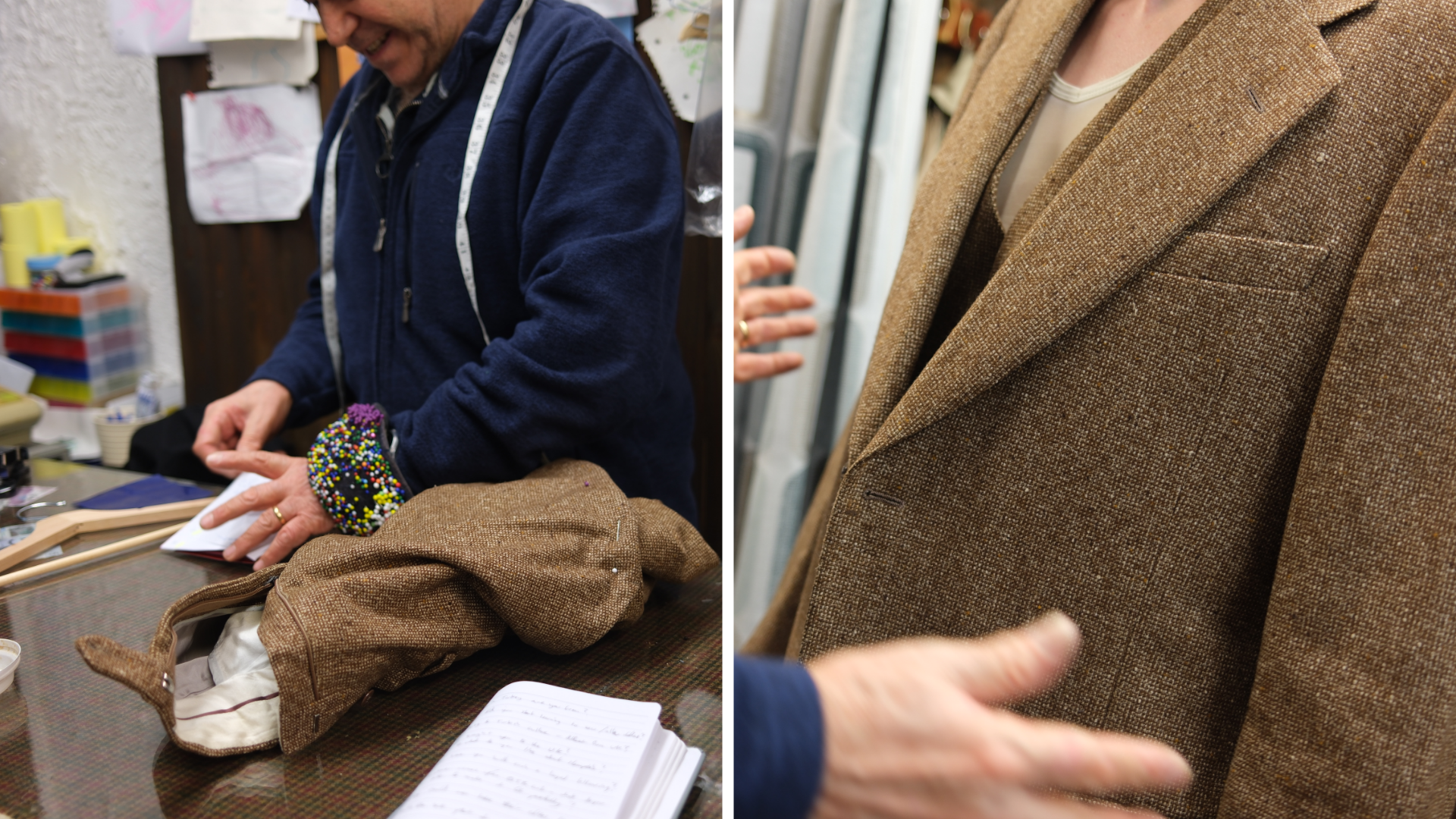
Right on cue, two customers walked in, one clad in a vintage tweed suit, the other carrying a check sport coat in need of alteration. Despite what select politicians claim, not everyone in Hampstead is a champagne socialist, bohemian or arty eccentric. But when we learned the man in tweed played the harpsichord for a living, and even taught the other man – a pilot – how to play, it did seem like a quota had been filled.
Were men like this actually typical of the area? Were they hired actors? I felt bewildered but vaguely starstruck in their presence, like I’d bumped into an inspiring teacher I had in Year 7 or recognised a contestant from an old episode of Take Me Out on the bus.
Turning to the pilot/harpsichord student, the man in tweed declared Halit a “magician.” After pausing our interview so Halit could pin the men’s clothes and also buy them coffee from next door, we asked how he instils such trust in his customers.
“People who go to tailors are very meticulous and selective. Because tailors are as meticulous as they are, we work well together.”
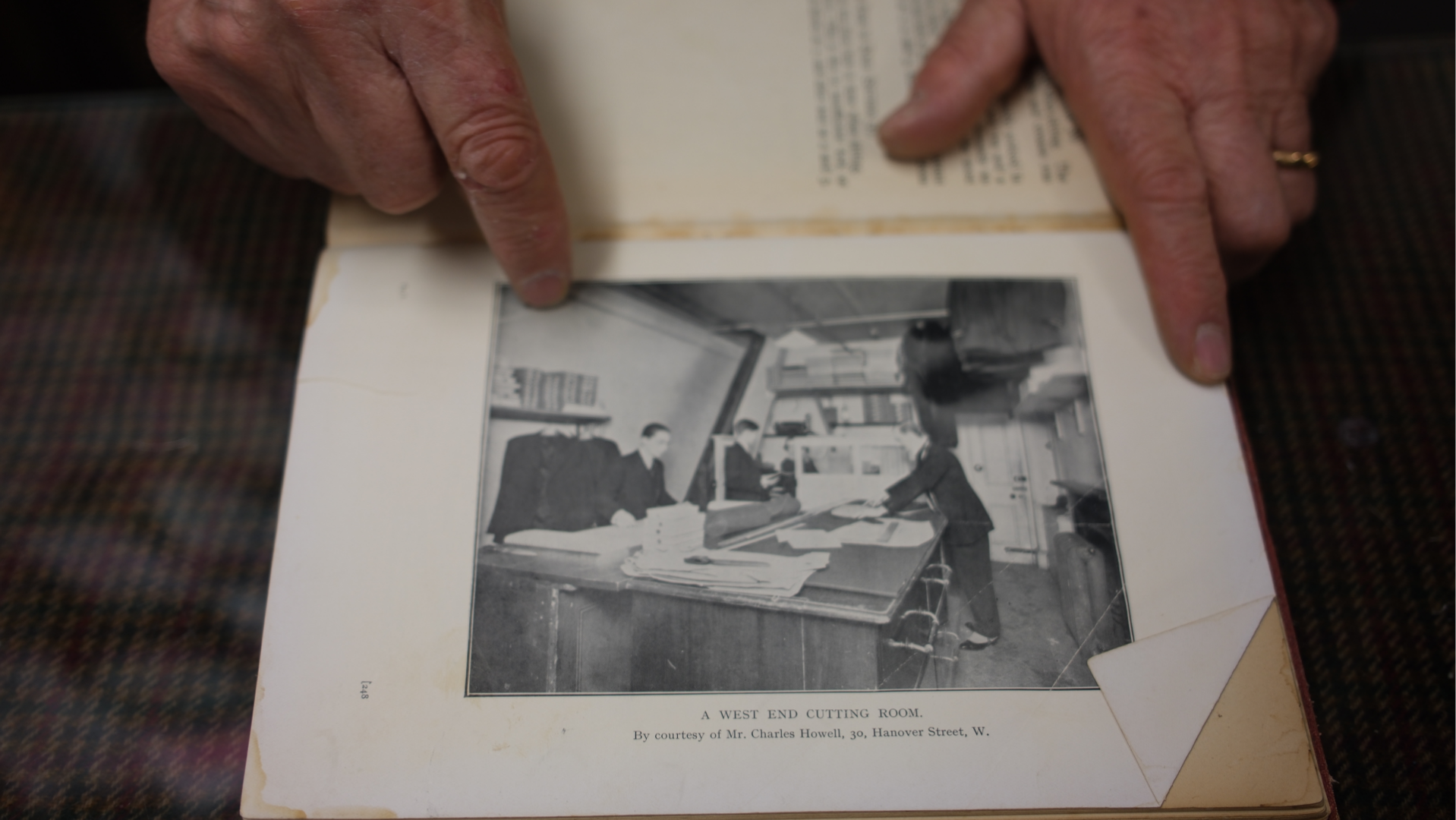
Hailing from Antakya, a city in the southernmost region of Turkey, Halit learned his craft from a teacher of Greek origin, a “foreign master” who created garments for local dignitaries. He was taught to make four-piece suits – two pairs of trousers, a waistcoat and a jacket. “These fabrics would last thirty, forty, even fifty years,” he reminisced.
After a stint in the military and five years in Cyprus, Halit moved to the UK in 1986. “I started work in textile factories,” he explained. “In one week, we used to make 6,000 jackets in a single factory. The eighties and nineties were very busy. In offices back then, people had to wear suits. This has changed now.”
Evolving tastes, globalisation, cheaper labour – whatever the reason, the country’s textile production started to move overseas. Halit had to pivot. He opened his shop in the mid-2000s and has been doing a steady trade ever since. In the process he’s built an entire community – drawn to his skilled workmanship against a background of declining appreciation for the craft.
“For the last thirty years, England has not been producing new tailors,” Halit said. “Tailoring is not only sewing. It’s about your culture. In the past people cared about presentation. Now people wear anything when they go out. My old teacher would never accept us if we showed up to work without a jacket and tie.”
Halit gave all his answers in Turkish. When pinning the harpsichordist’s tweed trousers, he communicated in gestures and broken English. Towards the end of our interview, he started to flutter his fingers through the air, like wings. At this point I had no idea what was happening, but here’s the translation:
“Tailoring comes from birds. Birds build nests. They collect materials and weave them – when they build nests, they weave and sew, in a way. That is the essence of tailoring.”
He went on to pull at an imaginary sleeve. “Sometimes I go to a wedding and see jackets with sleeves that are too short. A half-inch of the shirt cuff should appear under the jacket sleeve. It gives a person a completely different image.”
Whether you prefer vintage tweed suits or something more contemporary, these small but mighty details are why we also offer a tailoring service in all our stores.
“No matter how beautiful a garment is, it must fit your body,” Halit told us. “If a person lives well, and dresses well, they become more positive. Their confidence becomes very high.”